
Chicago's patio dining scene is genuinely one of the best in the country, and that is not a small claim for a city that spends a third of the year buried in cold. From rooftop terraces in River North to beer-soaked back patios in Logan Square, the city treats warm-weather outdoor seating like a civic event. This guide pulls together user-generated ratings from platforms like Yelp, Google, OpenTable, and Tripadvisor alongside editorial observations from Time Out Chicago, Eater Chicago, and Chicago Magazine to help you find the right patio for your mood, your group, and your budget. Whether you are a local scouting a new Sunday brunch spot, a traveler planning a summer visit, or a food-curious explorer who just wants to eat tacos outside in the sunshine, you are in the right place.
Patio Restaurant Chicago Reviews: Top Picks, Tips & Ratings

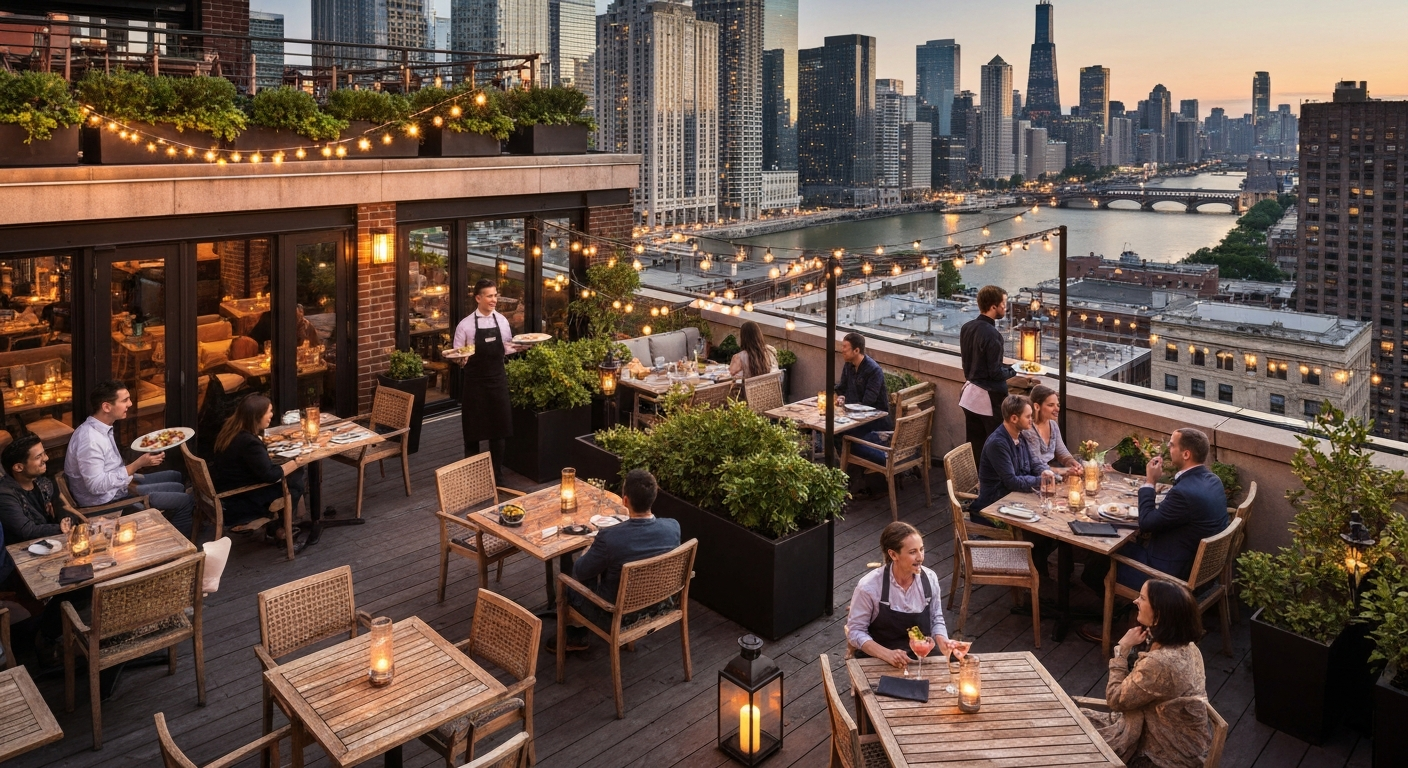
Why Chicago patio dining hits differently
There is something almost defiant about eating outside in Chicago. The season is short, the weather is unpredictable, and yet the city's restaurant community has invested heavily in making outdoor dining work across every neighborhood and price point. The City of Chicago's expanded outdoor dining and sidewalk café permit program has allowed hundreds of venues to claim the sidewalk, the parking lane, or a rooftop in ways that genuinely transform how a meal feels. When a restaurant invests in a proper patio, with real furniture, overhead coverage, and on-theme décor, it signals that they take the full experience seriously. That matters to diners, and it shows up in the reviews.
This guide exists because finding a great patio in Chicago is surprisingly hard to do with a single Google search. Ratings are scattered across platforms, seasonal closures go unannounced, and 'outdoor seating available' can mean anything from three wobbly chairs on a concrete slab to a 200-seat landscaped terrace with full cocktail service. We aggregate and explain what those ratings actually mean so you can walk into any reservation with clear expectations.
At-a-glance recommendations by mood and occasion
| Mood / Occasion | Venue Type | Neighborhood to Target | What to Look For |
|---|---|---|---|
| Romantic dinner | Rooftop or garden restaurant | West Loop, River North | Soft lighting, smaller tables, full cocktail program |
| Weekend brunch with friends | Full-service patio restaurant | Lincoln Park, Wicker Park | High review count, brunch menu, reservations available |
| Casual pizza and beer | Pizza patio or beer garden | Logan Square, Pilsen | Outdoor counter seating, local draft list, walk-in friendly |
| Family outing with kids | Family-friendly patio | Lincoln Park, North Center | Kid menu, shaded seating, low noise tolerance needed |
| Late-night social scene | Bar patio or nightclub patio | River North, Wicker Park | Open late, DJ or live music, standing room |
| Summer ice cream stop | Ice cream patio | Citywide | Walk-up window, picnic tables, shaded seating |
| Business lunch | Upscale patio restaurant | Loop, Streeterville | Table service, quieter atmosphere, private booking options |
| Neighborhood exploring | Neighborhood bar or taqueria patio | Pilsen, Bridgeport, Hyde Park | Local crowd, affordable menu, unpretentious vibe |
How our ratings are compiled
Every venue featured here is evaluated using a composite approach. We pull aggregated ratings and review counts from Yelp (via their Business Details endpoint, which returns a star rating and total review count alongside up to three recent review excerpts), Google Places (which surfaces an overall rating and total user ratings count), OpenTable (which breaks ratings down into food, service, and ambience subratings along with dined-date data), and Tripadvisor (which provides overall traveler ratings and recent snippets through its partner API). Where available, we also factor in Resy guest feedback, which skews toward a more reservation-savvy, experience-oriented audience.
Critically, we do not just average those numbers together and call it a day. Each platform attracts a different reviewer profile. Yelp skews local and casual. Google captures high volume but lower engagement per reviewer. Tripadvisor leans toward visitors and travelers. OpenTable captures verified diners who actually made a reservation. Understanding those biases helps explain why a single venue might show 4.2 stars on one platform and 4.6 on another, and why both numbers can be correct and useful at the same time.
The seven dimensions we evaluate
| Dimension | What We Measure | Why It Matters for Patios Specifically |
|---|---|---|
| Atmosphere | Décor, lighting, noise level, visual cohesion | Outdoor spaces vary wildly in how intentional the design feels |
| Seating quality | Furniture comfort, table spacing, shade, heating/cooling options | A beautiful patio with uncomfortable chairs gets old fast |
| Cuisine | Menu range, ingredient quality, dietary options | Outdoor kitchens sometimes run abbreviated menus |
| Drinks | Cocktail program, beer selection, non-alcoholic options | Patio visits often center around the drink experience |
| Service | Speed, attentiveness, staff knowledge | Wind, distance from kitchen, and layout challenge outdoor service |
| Value | Price-to-experience ratio across menu and drinks | Premium outdoor seating should justify any upcharge |
| Accessibility | Step-free access, surface type, ADA compliance notes | Sidewalk patios and rooftops vary significantly on this front |
We also cross-reference permit data from the City of Chicago's open dataset of active outdoor dining permits to confirm that a venue's patio is properly licensed. The city's sidewalk café rules, administered by the Department of Business Affairs and Consumer Protection (BACP), set requirements around pedestrian clearance, fire-safety compliance, and approved heating equipment. A venue operating a permitted patio has met those baseline standards, which is worth knowing before you show up.
How to use this guide
Think of this less as a ranked list and more as a decision tree. Start with your occasion from the at-a-glance table above, then use the neighborhood breakdown to narrow by location. If you are flexible on neighborhood, the venue-type sections will help you zero in on the right format, whether that is a full-service rooftop restaurant, a casual pizza patio, or a bar garden that stays open until 2 a.m. The family-friendly section is its own world and worth reading separately if you are traveling with kids.
- Check the seasonality notes: most Chicago patios open in late April or early May and close by mid-October, though some heated options run through November or year-round
- Make reservations for full-service restaurants, especially on Thursday through Sunday evenings; many popular River North and West Loop patios fill up two to three weeks out in peak summer
- Look for the permit verification badge on venue profiles, which confirms the City of Chicago has issued an active outdoor dining permit for that location
- Use the review filters to sort by occasion type (date night, family, group) or by season (summer ratings versus fall/heated patio ratings) for more relevant results
- If accessibility matters, filter specifically by 'step-free access' since many sidewalk patios have a curb step and rooftop patios require elevator access
Top-rated Chicago patio picks overall
Based on composite ratings across platforms and consistent editorial recognition from sources like Eater Chicago and Time Out Chicago, a handful of venues consistently rise to the top. Aba in the West Loop earns frequent praise for its Mediterranean menu and multi-level rooftop terrace, with OpenTable reviewers specifically calling out the ambience subrating as one of the highest for any Chicago patio. River Roast on the Chicago Riverwalk is another perennial favorite, with high Tripadvisor traveler ratings driven partly by its waterfront position and partly by the rotisserie-focused menu that holds up outdoors. These are not just critic favorites; they show up repeatedly in verified diner reviews with strong scores across atmosphere, food, and service.
For a more neighborhood-casual experience, several Logan Square and Pilsen spots consistently collect 4.4-plus star ratings on Yelp with review counts in the hundreds, which signals genuine sustained quality rather than a single viral moment. The pattern in those reviews is telling: people mention the lack of pretension, the affordable menus, and the fact that the outdoor space feels lived-in rather than staged. That is a real distinction worth seeking out.
Seasonal standouts worth planning around
Early summer (late May through June) is peak patio season before the humidity climbs. This is when you want to book rooftop and elevated patios that catch the breeze. Late summer into September is arguably better for ground-level patios because the temperatures are more comfortable in the evenings. Eater Chicago's heated patio roundups highlight venues that have invested in serious overhead heating infrastructure, propane or electric radiant heaters, and in some cases full glass enclosures or igloo-style structures that push the season well into November. Chicago Magazine has periodically featured new patios worth trying each summer, and those writeups are useful for catching newer venues that have not yet accumulated a large review volume but show strong early ratings.
Neighborhood breakdown: where to find great patios across Chicago
The Loop and Streeterville
The Loop is not a natural patio neighborhood but it has hidden gems, particularly along the Riverwalk and in Millennium Park's orbit. Riverwalk venues benefit from the waterfront setting, and on a clear summer evening the combination of boat traffic, skyline views, and a cold drink is genuinely hard to beat. The trade-off is price: Loop patios skew upscale, and value ratings on Google and OpenTable reflect that some diners feel the surroundings are doing more heavy lifting than the food. Streeterville adds a few hotel-bar rooftop options that are worth knowing about if you are staying in the area.
River North
River North has the highest density of patio restaurants in the city, and the competition keeps quality high. Expect full-service setups, strong cocktail programs, and polished outdoor furniture. The neighborhood also has the most nightclub patios, which means late-night atmosphere but potentially higher noise levels for early-evening diners. OpenTable curated lists frequently feature River North venues in their seasonal outdoor dining roundups, which gives you a useful editorial shortcut when planning.
West Loop
The West Loop is where Chicago's food ambition is most concentrated, and the patios reflect that. Aba's rooftop is the marquee example, but the neighborhood has a cluster of Randolph Street restaurants with sidewalk and rear-courtyard patios that range from sleek and minimal to lush and Mediterranean-inspired. Yelp review counts for West Loop patios tend to be high, with consistent mentions of the drink program and ambience. This is prime territory for date nights and celebratory dinners.
Lincoln Park
Lincoln Park benefits from tree cover, lower foot traffic than downtown neighborhoods, and a strong family-friendly dining culture. Patios here tend to be larger, less noisy, and better suited to longer, leisurely meals. Google ratings for Lincoln Park patios cluster in the 4.3 to 4.6 range with high review totals, suggesting consistent execution over time. This is also where you find some of the city's better brunch patios, with weekend crowds that are enthusiastic but not chaotic.
Wicker Park and Bucktown
Wicker Park patios have energy and edge. The neighborhood attracts a younger crowd and the outdoor setups tend to be creative, sometimes improvised-feeling in a way that works, think string lights, mismatched vintage furniture, and a very good local beer list. Bar patios here run late and fill up fast on weekends without reservations. The casualness is part of the appeal, but it means service quality can be more variable than in full-service restaurant districts.
Logan Square
Logan Square might be my personal favorite patio neighborhood in Chicago. The combination of large Victorian graystones with deep lots, a strong local restaurant and bar community, and a dining culture that values creative food without requiring a dress code produces some of the most genuinely enjoyable outdoor eating experiences in the city. Beer gardens here are excellent, pizza patios punch above their weight, and the review sentiment on Yelp for the neighborhood is consistently warm and specific in a way that tells you the reviewers actually lived the experience.
South Side (Pilsen, Hyde Park, Bridgeport)
The South Side is underrepresented in most Chicago patio guides, which is a real miss. Pilsen has a growing collection of restaurant and bar patios that skew toward Mexican cuisine and Latin-fusion menus, with outdoor setups that range from back-of-house courtyard patios to painted sidewalk café extensions. Hyde Park's patio scene clusters around the university and offers a mix of casual spots and a few upscale options near the lakefront. Review volumes are lower than on the North Side, which can make these spots harder to evaluate, but the ratings that do exist tend to be genuine and detailed.
Near North (Gold Coast, Old Town)
Near North has some of Chicago's most classic outdoor dining setups, particularly in Old Town, where sidewalk café culture has deep roots. Gold Coast patios lean toward the upscale hotel-bar model. If you are looking for a traditional Chicago outdoor dining experience with full table service and a sophisticated crowd, Near North delivers that reliably.
Venue-type deep dives
Full-service patio restaurants
Full-service patio restaurants are the gold standard of Chicago outdoor dining. These are venues where the outdoor space is a genuine extension of the dining room, with full menus, proper table service, and a kitchen setup that does not compromise on quality when you sit outside. Aba, River Roast, and a handful of Randolph Street anchors consistently top this category. OpenTable ratings for these venues are particularly useful because the subratings for food, service, and ambience are verified against actual reservation data. Look for venues where the ambience subrating is within 0.3 points of the food subrating. That parity is a strong signal that the outdoor experience is fully realized rather than a secondary afterthought.
Pizza patios
Chicago and pizza are inseparable, and the city's pizza patio culture is its own wonderful thing. A good pizza patio combines the social energy of outdoor dining with the communal nature of a shared pie, and in neighborhoods like Logan Square and Bucktown you will find spots that have nailed this combination. Review patterns on Yelp for Chicago pizza patios show that customers weight atmosphere and wait time almost as heavily as the pizza itself, which makes sense: you are not going to a pizza patio for a quiet contemplative meal, you are going to eat good pizza with people you like in the open air. If you are also exploring pizza patio culture in other markets, there are great comparisons to be drawn with the pizza patio scene in other cities covered on this platform. For a direct comparison, see reviews of The Patio Chicago Pizza in Snellville, GA. For more detailed evaluations and user ratings on specific spots, check our pizza patio reviews for focused notes on atmosphere, wait times, and pie quality the pizza patio reviews.
Ice cream patios
Ice cream patios are a category unto themselves, and Chicago does them well. The format is typically a walk-up or order-at-counter setup with picnic tables, shade structures, and a focus on the ice cream itself rather than full-table service. Google ratings for Chicago ice cream patios tend to be very high (4.5 and above) with large review counts, because the barrier to a good experience is relatively low and the pleasure-to-price ratio is hard to beat. The key variables to look for in reviews are shade quality (critical on a 90-degree July afternoon), seating capacity, and whether the location gets crowded to the point of losing its appeal. Ice cream patio experiences in other markets can also offer useful comparisons for understanding what makes the format work. For detailed ice cream patio reviews, check our full listings and aggregated user ratings.
Bars and beer gardens
Chicago's beer garden tradition is strong and getting stronger. The city's German and Eastern European heritage planted the roots of outdoor bar culture here a long time ago, and contemporary spots in Logan Square, Pilsen, and Andersonville have built on that tradition with craft beer lists and outdoor spaces that feel genuinely communal. Yelp reviews for Chicago beer gardens frequently mention the draft list and the social atmosphere before they mention food, which is appropriate context. These are places where you are buying into a scene as much as a menu. Service reviews are more variable here than at full-service restaurants, and that is expected: bar-service outdoor models prioritize volume and accessibility over attentiveness.
Rooftop patios
Rooftop dining in Chicago has matured significantly in the past decade. The best rooftop patios in the city are not just elevated bars with a view; they are full restaurant experiences that happen to be thirty feet in the air. The West Loop and River North lead for rooftop quality, with Aba's multi-level terrace being the most discussed example in both editorial coverage and user reviews. Tripadvisor ratings for Chicago rooftop patios tend to skew slightly higher than Yelp because the traveler audience finds the skyline views inherently impressive, which is worth accounting for when reading ratings. Accessibility is also a real consideration: if elevator access is required, confirm it is available and reliable before visiting with guests who have mobility needs.
Nightclubs with patios
A nightclub patio is a different beast than a restaurant patio, and reading reviews for them with the right expectations is important. The evaluation criteria shift significantly: atmosphere and music quality matter more than food, late-night access matters more than reservation availability, and service speed matters more than attentiveness. River North is the primary hub for Chicago nightclub patios, and reviews on Yelp and Google for these venues show a bimodal pattern: very high ratings from guests who came for the scene and got it, and frustrated low ratings from guests who expected a quieter dining experience. Reading the review text rather than just the star average is especially important in this category.
Family-friendly patios: what to expect and how to plan
Taking kids to a Chicago patio restaurant is one of summer's genuine pleasures when you find the right venue, and one of its genuine stresses when you find the wrong one. The difference comes down to a few specific features that are worth investigating before you commit to a reservation. Lincoln Park and North Center neighborhoods have the highest concentration of family-oriented patio restaurants, largely because the neighborhood demographics skew toward young families and the restaurants have responded accordingly.
Kid amenities worth looking for
- Dedicated kids menu with more than just chicken fingers and mac and cheese (a sign the kitchen takes young diners seriously)
- Shaded or covered seating that keeps direct sun off small kids during peak afternoon hours
- Physical space between tables so a toddler meltdown does not become the whole patio's problem
- Play areas or nearby park access for pre-meal or post-meal energy release (Lincoln Park has a natural advantage here)
- High chairs and booster seats available without a production, confirmed in recent reviews rather than just assumed
- Noise tolerance: a venue that is already moderately loud is actually easier for families than a quiet upscale patio where every child noise lands like a dropped pin
Review language is your best guide here. When Yelp reviews for a patio mention 'great for kids,' 'brought the whole family,' or 'stroller-friendly,' that community intelligence is more reliable than a venue's own marketing claims. Conversely, reviews that mention 'romantic,' 'intimate,' or 'quiet' are reliable signals that the space may not absorb a table of young children gracefully, even if the restaurant technically allows them.
Practical tips for patio dining with kids in Chicago
- Book the first available seating slot (typically 5 or 5: 30 p.m.) when the patio is less crowded and staff have more bandwidth
- Call ahead to confirm the patio is open and ask specifically about high chair availability and sun exposure in the evening hours
- Check the surface type in photos or recent reviews: gravel and cobblestone patios are harder to navigate with strollers than smooth concrete or wood deck surfaces
- For venues near the Riverwalk or lakefront, plan for wind that can make lightweight items and paper menus a minor battle
- Bring a small activity bag for waits; even well-run patios in peak summer have longer-than-expected kitchen times
- Review the menu online before going and identify what your child will eat: outdoor patios sometimes run abbreviated menus that differ from the indoor options
Practical visiting advice: reservations, weather, and accessibility
Chicago patio season runs roughly from late April through mid-October for most venues, with the core summer months of June, July, and August being the busiest. Reservations on OpenTable and Resy for popular West Loop and River North patios can fill up two to three weeks in advance on weekend evenings. If you are planning a summer visit specifically around patio dining, booking that far ahead is not paranoia, it is just reality. For neighborhood casual spots and beer gardens, walk-in is usually fine on weekdays and before 6 p.m. on weekends.
Weather is the elephant in every Chicago patio review. The city's weather can shift dramatically within a day, and outdoor dining plans get disrupted regularly by afternoon thunderstorms from May through August. Most venues with permanent patio structures have some rain protection (retractable awnings, pergolas with fabric covers) but many do not, and the City of Chicago's sidewalk café permit rules govern what structures venues can install. If weather security matters to you, look specifically for reviews that mention rain, because diners who have tested a patio in bad weather are reporting something useful about how the venue handles it. Eater Chicago's heated patio coverage is a good reference for venues that have invested in year-round or extended-season infrastructure.
Accessibility varies enormously across patio formats. The city's sidewalk café program requires that venues maintain a minimum pedestrian clearance on the sidewalk, but patio surfaces, entrance steps, and furniture arrangements all affect practical accessibility for guests using wheelchairs, walkers, or strollers. We specifically tag accessibility notes in venue profiles where that information appears in user reviews or permit documentation. If you have mobility considerations, it is always worth calling the venue directly before visiting, since permit-compliant does not automatically mean practically accessible for all guests.
How to read and contribute reviews on this platform
Our composite ratings pull from Yelp, Google, OpenTable, and Tripadvisor, and we surface those platform-specific numbers separately so you can weight them based on what matters to you. A 4.1 on Yelp with 800 reviews tells a different story than a 4.6 on Tripadvisor with 40 reviews, and showing you both without collapsing them into a single opaque number is a deliberate choice. Review counts matter because they indicate statistical reliability: a venue with 500 or more reviews is much harder to game or skew than one with 15.
When you contribute a review here, you are helping other diners make decisions with real information. The most useful patio reviews include specific detail about the outdoor space itself, not just the food. When posting photos, check image licensing rules, see Getty Images, License Agreement / EULA for an example of how stock-photo vendors and platforms describe permitted commercial use and attribution requirements Getty Images — License Agreement / EULA. Was there shade? How was the noise level? Were the heaters working in shoulder season? Was the furniture comfortable for a two-hour meal? Those details are what distinguish a helpful patio review from a generic restaurant review, and they are the signal that other diners are genuinely searching for when they read user-generated content before booking.
If you are exploring patio dining beyond Chicago, this platform covers outdoor venues across North America. The patio scene in Indianapolis offers an interesting regional comparison, and if you are interested in Italian-style outdoor dining environments, covered Eataly-style patio concepts are worth exploring for context on how curated outdoor dining experiences work at scale. For firsthand feedback on that format, see Il Patio di Eataly reviews. For a detailed product perspective, see our Elica patio ICT 773 review for hands-on testing of outdoor heating performance and furniture compatibility. For more on local options, see the patio Indianapolis reviews for venue-specific ratings and user feedback. Each of those markets has its own seasonal rhythms and venue culture, and the same evaluation framework we use for Chicago applies across all of them.
FAQ
What categories of data are required to create an accurate, transparent guide to Chicago patio restaurants?
Combine three classes: 1) Aggregated user-generated data (ratings, review counts, review text, reviewer metadata) to reflect crowd sentiment; 2) Editorial and critic sources (curated lists, feature articles, photos, maps) to provide context, seasonal/amenity observations and curated top picks; 3) Official/technical records (municipal patio/sidewalk-café permits, rules, fire/clearance requirements) and venue primary sources (menus, reservation policies, hours) to verify legality, capacity, service model and current offerings.
Which user-review APIs and endpoints should I use and what fields are essential?
Prioritize: Google Places Place Details (aggregated 'rating', 'user_ratings_total', reviews, photos), Yelp Places API Business Details and Reviews (aggregated rating, 'review_count', up to 3 review excerpts), TripAdvisor Partner JSON (overall rating, review count, snippets). Essential fields: aggregated rating, review_count/user_ratings_total, timestamp of reviews, review text, reviewer identifier/anon id, reviewer rating, photos attached, subratings if available (food/service/ambience), geolocation/place_id and URL. Record API timestamps and query parameters for reproducibility.
Which editorial sources should be included for curated context and seasonal notes?
Include local editorial leaders: Eater Chicago, Time Out Chicago, Chicago Magazine, and OpenTable curated lists. These provide critic descriptions, neighborhood breakdowns, photos, notes on heated/igloo patios, and seasonal updates. Capture publication timestamps, author, and any stated selection criteria to surface editorial bias and seasonality.
How should municipal and legal data be used and where to get it?
Use City of Chicago open data for active patio/patio-license records, and the City/BACP permit PDFs and Sidewalk Café rules for operational/legal constraints (clearances, heater/fire rules, insurance). Cross-check venue listings to confirm permits, footprint, permit issue/expiry dates, and compliance details (e.g., permitted heaters). These records anchor claims about legality and year‑round operation capacity.
What venue-level primary sources are required?
Collect each venue’s official website, reservation profiles (OpenTable/Resy), published menus, event calendars, and social media posts. These confirm current hours, menu items/pricing, reservation rules (reservations vs walk-ins), private‑party policies, and real‑time closures or temporary changes (renovations, weather-related closures). Always archive or timestamp the captured pages.
What metadata and provenance must be stored to make ratings reproducible and transparent?
Store source name, endpoint/URL, API parameters, date/time of fetch, version of API or page snapshot (or archived URL), data fields retrieved, and any post‑processing steps (deduplication, sentiment analysis). Log rate limits, sampling windows, and any filtering rules (e.g., remove reviews older than X years). Publish a clear methodology section summarizing these items for readers.