
To get reliable reviews for a patio Italian restaurant, start by confirming you have the right venue pinned on the map, then dig past the star rating into the specific details reviewers share about the outdoor seating, Italian menu consistency, and service speed during a busy patio night. The star number tells you almost nothing on its own. What actually tells you whether a place is worth it tonight is the pattern of specific, detailed feedback, and knowing how to read it.
The Patio Italian Restaurant Reviews: How to Read and Pick

Jonah Lawson
10 Jun 2026
Making sure you're reading the right 'The Patio' Italian restaurant
This is genuinely the first problem to solve. 'The Patio' is one of those venue names that gets recycled constantly. There are patio bars, patio social clubs, patio grills, and patio Italian kitchens scattered across dozens of cities, and their review listings can bleed into each other on aggregator sites. Before you trust a single review, verify you're looking at the exact place you mean.
On Google Maps, Yelp, and Tripadvisor, the fastest check is the map pin. Tripadvisor even has an explicit 'Verify Map Pin' workflow built into their listing system, which tells you something: pin placement errors are common enough that they built a fix for it. Zoom into the map on the listing and confirm the pin drops at an address you recognize. If you searched 'The Patio Italian Kitchen' and the pin lands somewhere that doesn't match the neighborhood you're thinking of, you're looking at the wrong place.
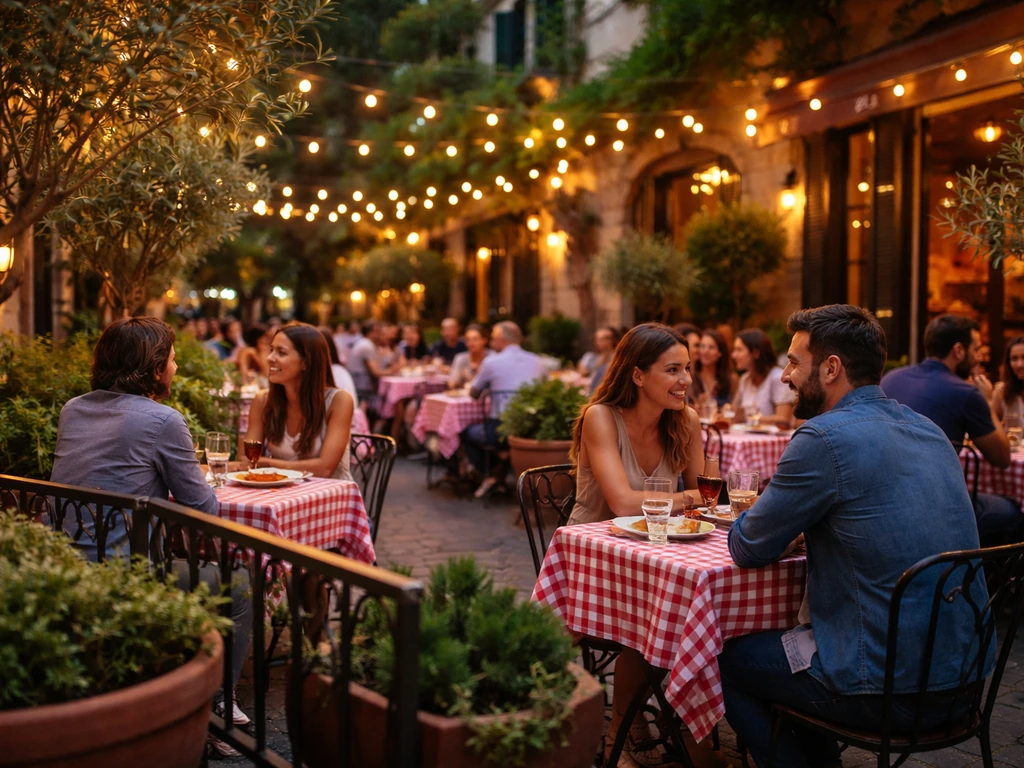
Beyond the map, cross-check photos. Tripadvisor listing guidance specifically highlights hero images showing the dining room and outdoor space. Compare the photos on the listing to any you've seen on the restaurant's own social accounts or website. Look for the patio itself: the furniture style, string lights, planters, awning, or whatever makes it distinctive. If the photos match up, you're in the right place. If the listing shows a generic stock-looking interior shot with no visible outdoor space for a venue that's supposed to have a signature patio, flag that as a mismatch worth investigating before you read another word of the reviews.
- Confirm the street address and neighborhood match the venue you have in mind
- Check the map pin placement directly on the listing, not just the written address
- Compare listing photos with the restaurant's social media or website images
- Look for the patio space itself in the photos, not just indoor dining shots
- Verify the cuisine tag says 'Italian' or 'Italian Kitchen,' not just 'American' or 'Bar & Grill'
What to actually look for in patio restaurant reviews

The star rating is a starting point, not an answer. A 4.1 vs a 4.3 on Yelp or Google is statistical noise when you're talking about a few hundred reviews. What matters is the texture of the feedback, and that means reading actual review text rather than sorting by stars.
Google's own research on restaurant review credibility points to three signals worth trusting: level of detail, whether the sentiment is balanced (mentioning both positives and negatives), and whether the reviewer demonstrates real familiarity with the space. A reviewer who says 'great vibes, loved it' gives you nothing. A reviewer who says 'the covered portion of the patio fits maybe 20 people and fills up fast, the uncovered section gets direct sun until about 7pm, and the servers moved quickly even when it was packed' gives you something you can actually use.
On Yelp, the default sort order blends recency, user voting, and review-quality signals, which means a well-written recent review may appear above older ones. This is actually useful for patio dining specifically, because outdoor conditions change seasonally. A review from last July about brutal heat and no fans is more relevant in June than a winter review praising the heaters. Pay attention to when reviews were written relative to the time of year you're planning to visit.
Tripadvisor flags suspicious reviews through automated analysis and manual moderation, which gives you some baseline trust that the reviews you're reading cleared a filter. That doesn't mean every review is perfect, but it does mean obvious fake-positive reviews are being caught. Still, your job is to read critically, not outsource all judgment to a platform.
How to read Italian food quality signals in the reviews
For an Italian patio restaurant specifically, you're evaluating two things at once: the kitchen and the outdoor setting. Most reviewers instinctively focus on one or the other, so you have to read across multiple reviews to get a complete picture of both.
On the food side, look for reviews that mention specific dishes by name. 'The pasta was good' tells you almost nothing. 'The cacio e pepe was underseasoned and the portion was small for the price' or 'the chicken parm was the size of a dinner plate and the sauce had real depth' tells you a lot. Italian food is a cuisine where execution consistency matters enormously. Pasta sauces, fresh pasta versus dried, and house-made bread versus packaged are all things reviewers notice and mention when they're being specific.
Watch for patterns across reviews rather than individual opinions. If five out of twenty recent reviews mention that the pizza crust is inconsistent, that's a real signal. If only one person out of thirty mentions bland pasta, that might be personal preference. Frequency and recency together tell you whether a quality issue is structural or occasional.
| Review Signal | What It Actually Tells You | How to Weight It |
|---|---|---|
| Dish mentioned by name with specific descriptor | Reviewer actually ate there and paid attention | High value |
| General praise like 'amazing Italian food' | Low detail, limited credibility for decision-making | Low value |
| Portion size mentioned with price context | Useful for value assessment | Medium-high value |
| Consistency complaint across multiple reviews | Likely a real kitchen issue, not taste preference | High value |
| Single negative comment on food quality | Could be a bad night or personal preference | Low-medium value |
| Mention of fresh pasta, house-made sauces, or imported ingredients | Signals a kitchen investing in quality | High value |
The patio experience checklist: what reviews should tell you
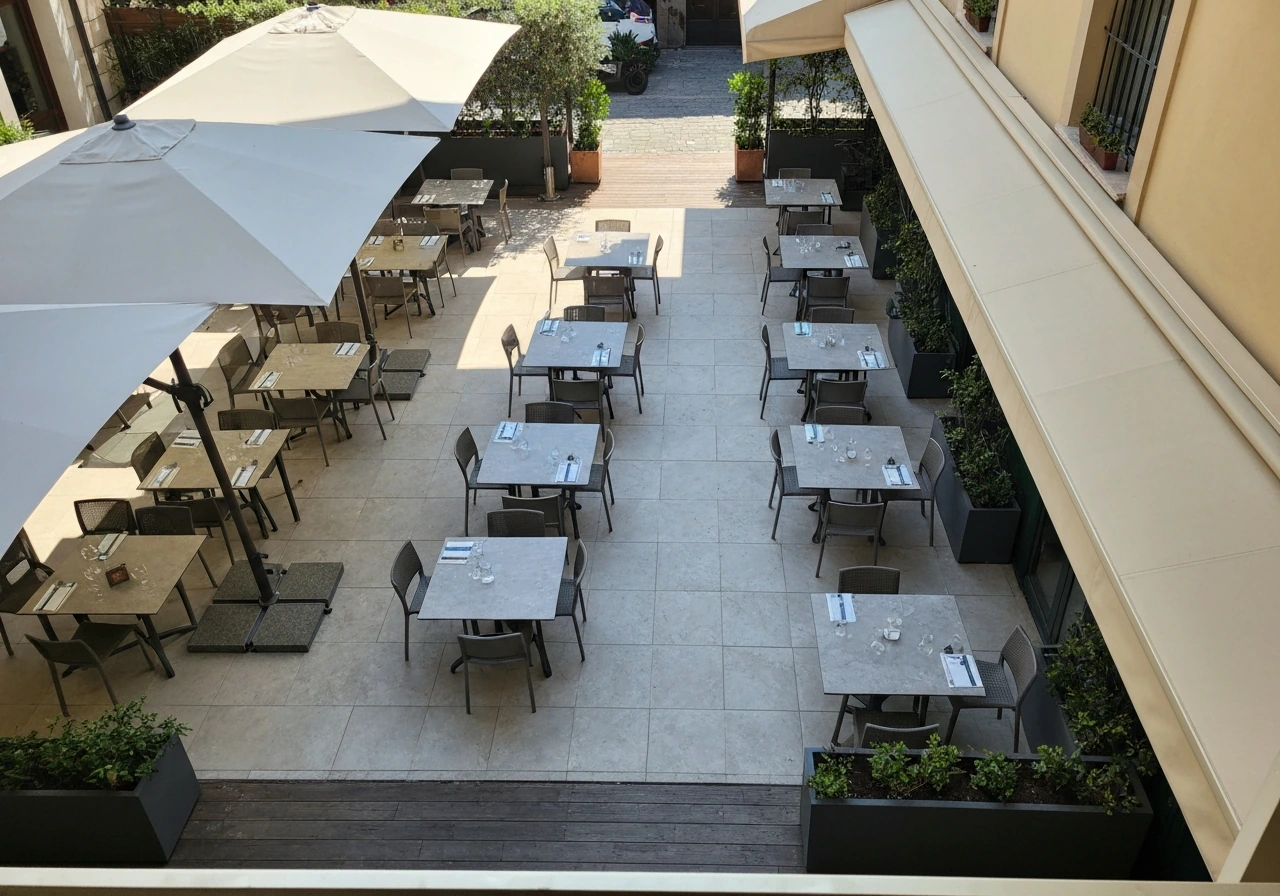
This is where most people underinvest their reading time, and it's the part that matters most for a patio Italian restaurant. The outdoor setting is the whole point of choosing this type of venue. Here's what to specifically hunt for in the reviews.
Seating and layout
Look for any mention of how many people the patio fits, whether there's a covered versus uncovered section, and whether tables feel cramped or spacious. Reviewers who complain about tables being too close together during a busy Saturday night are flagging something real. Good patio Italian restaurants usually have a few seating zones, and knowing which one suits your group matters.
Ambiance and noise
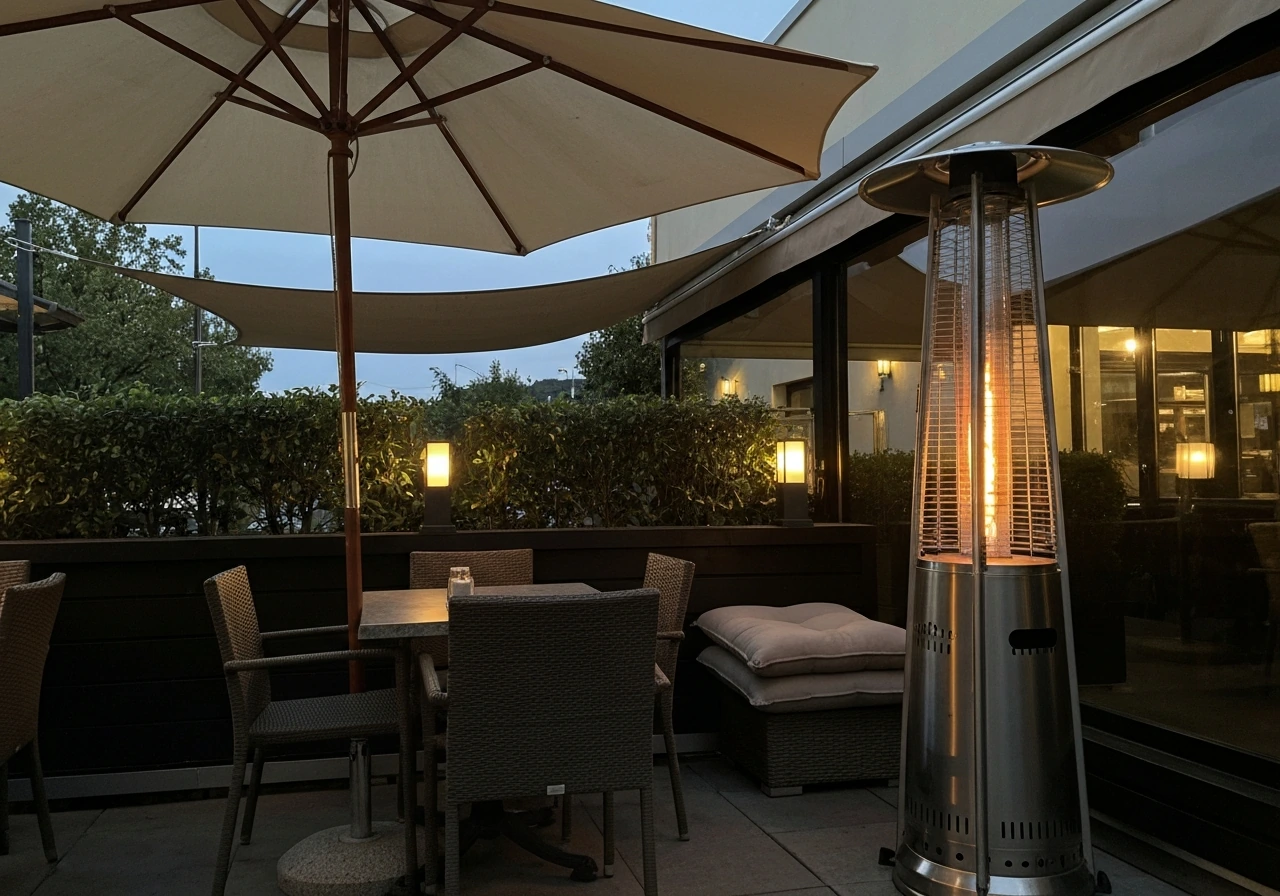
Patio dining can go from lively and warm to genuinely too loud to hold a conversation, depending on the night and the setup. Check reviews for noise mentions, especially if you're planning a date night or a business dinner. A patio with live music every Friday is wonderful if you knew to expect it and a surprise if you didn't. Also look for atmosphere descriptions: string lights, greenery, fire pits, and water features all show up in reviews when they're done well.
Weather coverage: shade, heaters, and fans
This is arguably the most practical patio-specific detail to extract from reviews. Look for mentions of awnings, retractable roofs, umbrella coverage, misting fans, outdoor heaters, or fire pits. If you're visiting in June, reviews mentioning 'no shade and brutally hot' are a direct warning. Conversely, reviews that praise outdoor heaters in October tell you a venue has thought about year-round comfort. For a venue search in June 2026, prioritize reviews from the past two summers and filter for any heat or sun complaints.
Service on the patio
Outdoor service is legitimately harder to execute than indoor service. Servers cover more ground, drinks warm up faster, and timing food to tables across a spread-out patio requires coordination. Reviews that specifically call out slow service on busy nights, or praise servers who stayed attentive even during a full patio, are giving you real operational insight. If multiple recent reviews mention that service gets stretched thin on weekends, plan for it or go on a Tuesday.
Wait times, parking, and access
Check for any recurring complaints about wait times even with a reservation, difficult parking, or unclear entrance to the patio area. These aren't dealbreakers for most people but they're worth knowing before you show up. Italian restaurants with popular patios often fill fast on warm-weather evenings, and a review pattern of 'we waited 45 minutes past our reservation time' is a signal to either call ahead or build buffer time into your night.
How to compare reviews and handle mixed feedback fairly
Mixed reviews are the norm for any good restaurant with a real patio. The outdoor format introduces variables that indoor restaurants don't face: weather, seasonal staffing, and the reality that a patio experience on a perfect Wednesday evening is genuinely different from the same spot on a packed Saturday in a heat wave. Reading mixed reviews fairly means separating situational complaints from structural ones.
A situational complaint sounds like: 'We went on a holiday weekend and the kitchen was slammed, food took forever.' A structural complaint sounds like: 'Every time we've been, the pasta arrives lukewarm and the patio smells like the nearby dumpster.' The first is understandable; the second tells you something that probably won't change. Always ask yourself whether the complaint is about one bad night or a repeating pattern.
When you see a cluster of 3-star reviews, read them more carefully than the 5-stars and 1-stars. Three-star reviews tend to be the most honest because the reviewer isn't in love with the place or angry at it. They usually lay out exactly what worked and what didn't, which is exactly the information you need before choosing somewhere tonight.
Also compare top-tier and mid-tier reviews by looking at what topics they overlap on. If the 5-star reviews rave about the bruschetta and the patio vibe on weeknight evenings, and the 3-star reviews say the same patio felt chaotic on a Friday, that convergence gives you a clear picture: the place is probably excellent on a quieter night and variable on peak nights. That's genuinely useful information for planning.
On platforms like Tripadvisor, where flagging suspicious reviews is part of their process, try filtering by 'Excellent' and 'Average' simultaneously and skim for thematic overlap. On Yelp, look at reviews that the community has voted as 'Useful,' since those tend to be the more detailed, balanced ones that rise through Yelp's quality-weighted sort.
How to make your decision and what to do before you go
Once you've read through a solid cross-section of reviews, use this simple framework to make the call. If you can check off most of these, the venue is worth booking tonight.
- You've confirmed the map pin and photos match the specific venue you meant to find
- Recent reviews (last 3-6 months) mention specific dishes positively and describe an Italian menu with real depth
- The patio has some form of weather coverage or shade relevant to your visit date, confirmed by reviewer photos or descriptions
- Service reviews are mostly positive, with any negatives concentrated around peak weekend hours you can avoid
- No repeating structural complaints about food quality, noise levels that would ruin conversation, or persistent wait-time problems
- The 3-star reviews read as situational rather than systemic
If the venue passes that check, here are your actual next steps before arriving. Call or check the website to confirm whether reservations are required or recommended, especially for patio seating specifically. Many Italian patio restaurants reserve their indoor tables through OpenTable or Resy but treat the patio as walk-in only, or vice versa. Ask for a patio table explicitly when booking, not just 'outdoor' in general, because some venues have a back patio and a front sidewalk seating area with very different vibes.
If heat is a concern for a June visit, call and ask directly whether there's shade or misting on the patio in the afternoon and evening. A quick 30-second call saves you a sweaty dinner. Ask about parking if reviews flagged it as an issue, because street parking situations change and a lot of Italian restaurants in denser neighborhoods have parking relationships with nearby garages that aren't advertised anywhere online.
Finally, if you're comparing more than one venue, check whether a comparable Italian patio concept you're considering is a standalone place or part of a local Italian dining cluster. Some patio Italian restaurants, similar to spots like Patio Dolcetto and others in the Italian patio dining niche, are neighborhood anchors with long community histories and loyal regulars, while others are newer concepts still finding their footing. Reviewer tone often reflects that: long-time regulars write with a warmth and specificity that newer-concept reviews rarely match. That loyalty signal is worth something when you're deciding where to spend a summer evening.
The bottom line: a reliable read on a patio Italian restaurant comes from verifying the listing first, reading the detailed middle-tier reviews for honest texture, checking patio-specific comfort signals for your season, and looking for consistent food quality patterns in the dish-level feedback. If you want a quick starting point, you can also look at specific il patio santa margherita ligure reviews as a nearby comparison, then come back to these patio-focused reading checks to confirm the details match the place you mean Reviews for il patio santa margherita ligure reviews. When you narrow it down to a specific restaurant, take a look at the patio Lombard reviews to see whether the patio details match what you want the patio Italian restaurant. Do that, make the call, and go enjoy the patio.
FAQ
How can I tell if a “patio Italian restaurant” review is describing the patio I’ll actually sit on (not indoor dining)?
Look for words tied to outdoor variables, like covered vs uncovered, direct sun, heaters, umbrellas, and “patio fills up” language. If reviews never mention any patio-specific detail but only talk about server tone or pasta taste, you should assume they might be describing indoor seating or a different area than the one you want.
What should I do if the reviews say the patio is great, but the food reviews are mixed?
Use dish-level specificity as your tiebreaker. If mixed reviews repeatedly name the same dishes (for example, pasta always lukewarm or the pizza crust inconsistent), that suggests a structural kitchen issue. If the negatives are vague (“average food”) and positives name multiple dishes, the patio praise may still be a safe bet, just order from the best-reviewed items.
Are very recent reviews always the most useful for patio dining?
Not always. For patios, recency matters for weather and staffing, but you also want at least a small spread across nearby weeks (for example, early and mid-summer). One off night can look extreme; look for confirmation in the next cluster of reviews, ideally within the last two summers for seasonal issues like shade and noise.
How do I interpret a “busy night” complaint that mentions slow service or long waits?
Treat it as a planning constraint, not necessarily a reason to avoid the restaurant. Note whether the delay is described as “after we ordered” or “before we were seated,” and whether reservations were honored. If multiple recent reviews mention the same issue even with reservations, that is more concerning than a one-time holiday rush.
What if the patio seems crowded in reviews, but I’m okay with a lively vibe?
Separate “close tables” from “uncomfortable noise.” If reviewers mention tight spacing only, you may still enjoy the atmosphere. If they mention difficulty hearing each other, servers struggling to get around, or obstructed sightlines, that can make even a lively patio hard to enjoy, especially for dates or celebrations.
How can I spot unreliable reviews when looking for the patio italian restaurant reviews angle?
Watch for reviews that are too generic (“amazing vibe, great food”) without outdoor specifics like shade coverage, heater type, or how the patio layout affects seating. Also pay attention to mismatches between photo evidence and the review text, such as praise for an open-air patio when the listing photos show no outdoor space.
Do I need to call ahead every time, even if reviews mention reservations are available?
Yes, especially if you care about patio seating specifically. Many Italian spots treat indoor and outdoor differently, patio tables can be limited, and hosts may allocate seating by arrival time. Ask whether patio reservations are held separately from indoor bookings and confirm what “outdoor” means for that location.
What’s the best way to decide between two similar patio Italian restaurants using reviews?
Create a quick comparison by counting how often each place is credited with the same patio feature you care about (heat protection, shade at your arrival time, noise level, and seating comfort). Then compare dish consistency using named favorites and repeated negatives. The winner is usually the one with more overlap between patio comfort praise and stable execution on a few signature dishes.
If I’m going in summer, what patio details should I prioritize in reviews?
Prioritize shade and heat-management specifics, like misting fans, umbrellas, retractable covers, and whether direct sun hits tables after certain hours. Also check for complaints about “flies,” “lack of ventilation,” or “drinks warming fast,” since those are common summer-pattern issues that don’t appear in winter reviews.
Is it worth filtering for mid-tier reviews like 3 stars, or should I only read top and bottom ratings?
Mid-tier reviews are often the most decision-useful because they typically describe tradeoffs in detail. Still, don’t ignore 1 and 5 star extremes, use them to confirm patterns: if the same patio complaint appears across 3 stars and 1 stars (for example, no service attention), it is more likely to be structural than a one-off complaint.